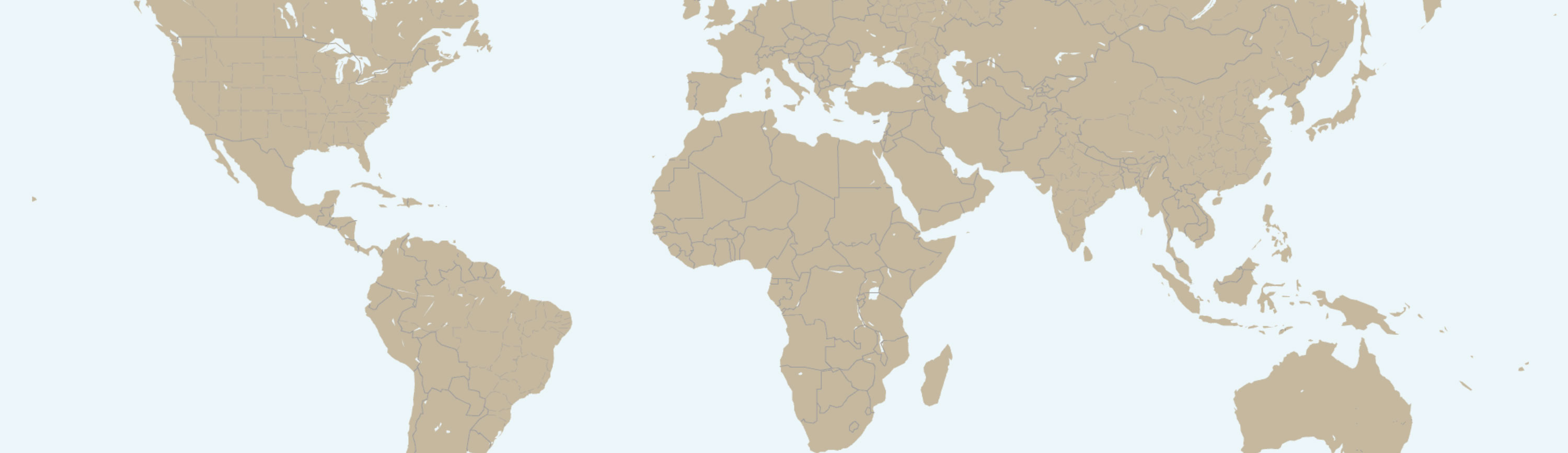
Please note that not all cases of disease or outbreaks are reported; some outbreaks may only be reported if they occur outside of the usual recognised risk area or season, or they have been reported in greater than usual numbers. See 'About Outbreaks' tab below for further detail.
For further information on red, amber and green alert categories, see About Outbreaks tab.
Influenza A(H5) in Australia
On 23 August 2026, the Australian Centre for Disease Preparedness confirmed the detection of H5 high pathogenicity bird flu (avian influenza) in a long-nosed fur seal found at Beachport in South Australia. This is the first detection of avian influenza A(H5) in a mammal in Australia. Please see our Topics in Brief article for further details on avian influenza.
cVDPV3 in Niger
In the week ending 21 August 2026, one case of circulating vaccine derived poliovirus type 3 (cVDPV3) was reported from Niger, with onset of paralysis on 28 June 2026. Please see our Topics in Brief article for further details on polio.
Legionnaires' disease in Austria
As of 20 August 2026, 26 cases and three associated deaths from Legionnaires' disease have been reported from Linz, Austria. The source of infection is not yet known.
Tick-borne encephalitis in United Kingdom
As of 17 August 2026, there have been ten locally acquired cases, three confirmed and seven probable, of tick-borne encephalitis in the UK. Regions where confirmed and probable cases have been reported are Devon, Hampshire, Outer Hebrides, Scottish Highlands and Yorkshire. The risk is very low for the general population and low for high risk groups (such as those living, working or visiting affected areas, as determined by duration of time spent outside). Please see our Topics in Brief article for further details on tick-borne encephalitis.
Crimean-Congo haemorrhagic fever in Albania
As of 4 August 2026, a case of Crimean-Congo haemorrhagic fever (CCHF) was reported in Tropojë district, Kukës in northern Albania. CCHF cases were last reported in Kukës in 2023. Please see our Topics in Brief article for further details on Crimean-Congo haemorrhagic fever.
Dengue in Sri Lanka
As of 15 August 2026, the National Dengue Control Unit in Sri Lanka has reported a total of 92,011 dengue cases and 68 deaths in 2026. Please see our Topics in Brief article for further details on dengue.
As of 29 July 2026, 84,091 dengue cases and 61 deaths have been reported in Sri Lanka in 2026. Please see our Topics in Brief article for further details on dengue.
Source: StateAs of 15 July 2026, Sri Lanka has reported a total of 72,430 dengue cases, with 49 deaths, during 2026. Please see our Topics in Brief article for further details on dengue.
Source: StateAs of 22 June 2026, Sri Lanka has reported 47,530 dengue cases, with 29 deaths, in 2026. Please see our Topics in Brief article for further details on dengue.
Source: StateAs of 15 June 2026, Sri Lanka has reported over 41,000 dengue cases in 2026. Please see our Topics in Brief article for further details on dengue.
Source: WHOAs of 23 November 2025, a total of 45,422 dengue cases have been reported in Sri Lanka during 2025. Please see our Topics in Brief article for further details on dengue.
Source: WHOCrimean-Congo haemorrhagic fever in Spain
As of 13 August 2026, a case of locally acquired Crimean-Congo haemorrhagic fever (CCHF) has been reported in Salamanca. This is the fourth reported case of CCHF in Spain in 2026, and the third from Salamanca. Please see our Topics in Brief article for further details on Crimean-Congo haemorrhagic fever.
On 29 July 2026, a confirmed case of Crimean-Congo haemorrhagic fever (CCHF) was confirmed in the Ciudad Real Province. Please see our Topics in Brief article for further details on Crimean-Congo haemorrhagic fever.
Source: StateAs of 15 July 2026, a second case of locally acquired Crimean-Congo haemorrhagic fever (CCHF) has been reported in Salamanca. The timing of these cases aligns with the expected seasonal pattern of CCHF in Spain. Please see our Topics in Brief article for further details on Crimean-Congo haemorrhagic fever.
Source: ECDCAs of 10 July 2026, local health authorities have reported a death from Crimean-Congo haemorrhagic fever in Salamanca, Spain. The case had reported a tick bite. Please see our Topics in Brief article for further details on Crimean-Congo haemorrhagic fever.
Source: StateSince the beginning of 2026 and as of 17 June, one confirmed case of Crimean-Congo haemorrhagic fever has been reported in Salamanca, Spain. Please see our Topics in Brief article for further details on Crimean-Congo haemorrhagic fever.
Source: ECDCDengue in Malaysia
As of 12 August 2026, a total of 56,319 dengue cases have been reported in Malaysia during 2026. Please see our Topics in Brief article for further details on dengue.
Hantavirus in France
On 6 August 2026, one case of Hantavirus Andes virus (ANDV) was reported in a French-Argentine citizen who travelled through France in late July. The case is now isolating in Spain and is asymptomatic. Please see our Topics in Brief article for further details on hantavirus.
Chikungunya in Nicaragua
As of 3 August 2026, the US Centers for Disease Control and Prevention (CDC) have reported increased cases of chikungunya in Nicaragua, with most cases in Managua. Please see our Topics in Brief article for further details on chikunguna.
NaTHNaC regularly review and update information on disease outbreaks and other health issues that may affect the UK traveller. You can search the information by disease or by country in our Outbreak Surveillance section.
The information comes from a wide variety of sources and can be used along with the Country Information section of our website where you will find recommendations on vaccines, malaria and other risks for each country (where relevant).
Please note that not all cases of disease or outbreaks are reported. In some countries, there may be limited surveillance and reporting processes in place so information can be difficult to obtain. Some diseases may only be reported if they occur outside of the usual recognised risk area or season, or they have been reported in greater than usual numbers. Outbreaks of those diseases included in the UK childhood vaccination programme are not usually reported unless the outbreak is unusual or unexpected.
The information presented in the disease surveillance reports is collated from a variety of sources, including government bodies, international organisations and the media. The verification status of each report is clearly indicated. Verified reports are confirmed by official sources. Some unverified reports are included to ensure timely dissemination of information and where possible we will try to substantiate these reports, although confirmation may not always be possible. Unverified reports may be subject to change, misreporting and may later prove to be unsubstantiated. They should not therefore be regarded as official.
Where available, a web link is provided to the original information source. We cannot accept responsibility for the sites to which it links, or for the information found on those sites. Linking to outside sites does not in any way imply endorsement of these sites. If you wish to use the following content for official purposes, please refer to the original sources of information.
Key to NaTHNaC alert level feature
LEVEL 1: GREEN |
Take usual precautions
|
Follow standard protective measures, as recommended for this destination, disease or situation. Be aware that advice may change and check for updates. |
|
LEVEL 2: AMBER |
Take extra precautions
|
Follow any additional precautions recommended. Be alert and check regularly for changes in advice about this ongoing situation. Advice may be relevant for all travellers or apply to a specific group of travellers. |
|
LEVEL 3: RED |
FCDO advise against travel
|
The Foreign, Commonwealth & Development Office (FCDO) advise against travel on health grounds. This may mean avoiding non-essential travel, or all travel, follow the FCDO advice for details. Please note we do not report on FCDO safety and security alerts. Travellers should check the FCDO travel advisories for their destination for this information. |
|
Alert categories are based on the situation at the time of publication. They will not be routinely updated unless outbreak information or a news item is updated.
Help us to adapt a Travel Health Resource for UK Travellers

Take part in a study that aims to help UK travellers make informed choices about Japanese encephalitis (JE) vaccination.
Find out moreGet TravelHealthPro on your site

Integrate features of TravelHealthPro into your own website with our API and widget