

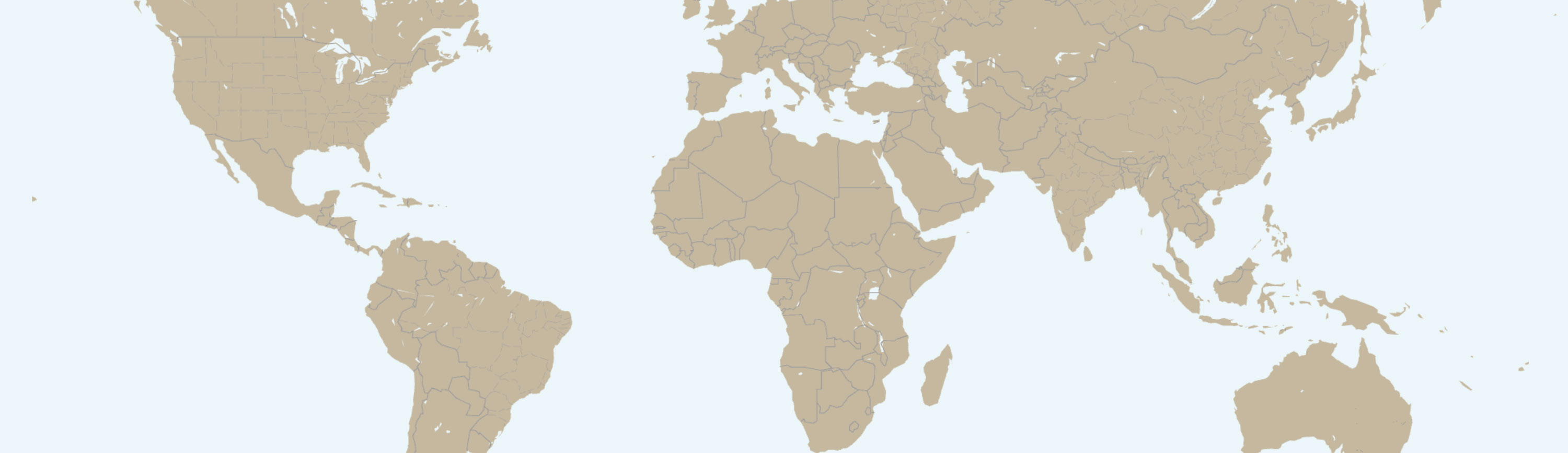
Please note that not all cases of disease or outbreaks are reported; some outbreaks may only be reported if they occur outside of the usual recognised risk area or season, or they have been reported in greater than usual numbers. See 'About Outbreaks' tab below for further detail.
For further information on red, amber and green alert categories, see About Outbreaks tab.
Zika in France ex Indonesia
Between July 2025 and March 2026, 11 travel-associated cases of Zika virus disease have been reported in France linked to travel to Indonesia, including all four cases detected in early 2026. Most cases were associated with travel to Bali and neighbouring islands. Please see our Topics in Brief article for further details on Zika virus.
Zika in Bolivia
As of 28 March 2026, a total of 1,168 cases of Zika virus disease have been reported in Bolivia since the start of 2026. This represents a large increase compared to the same period in 2025. 1,224 cases were recorded for the whole of 2025. Please see our Topics in Brief article for further details on Zika.
Oropouche virus disease in Colombia
As of 19 March 2026, a total of 21 cases of Oropouche virus disease (OROV) were reported in Colombia during 2025. Please see our Topics in Brief article for further details on Oropouche virus disease.
Undiagnosed illness in Burundi
As of 11 April 2026, a total of 35 cases of an undiagnosed illness, including five deaths, have been reported in Mpanda district, in the north of Burundi. Symptoms include fever, abdominal pain, vomiting, diarrhoea, blood in urine and fatigue. Some severe cases have also presented with anaemia and jaundice. Currently, laboratory testing is negative for Ebola and Marburg virus diseases, Rift Valley fever, yellow fever and Crimean-Congo haemorrhagic fever. Investigations are ongoing.
Influenza A(H9N2) in Italy ex Senegal
On 10 April 2026, the World Health Organization reported the first imported human case of avian influenza A(H9N2) in Italy. The case was in an adult returning from Senegal. This is also the first imported human case of avian influenza A(H9N2) reported in the European Region. Please see our Topics in Brief article for further details on avian influenza.
Hepatitis A in Sweden
As of 27 March 2026, a total of 11 cases of hepatitis A (genotype IA) associated with eating frozen imported strawberries and raspberries have been reported in Sweden since autumn 2025. Please see our Topics in Brief article for further details on hepatitis A.
Influenza A(H7N7) in Taiwan
On 3 April 2026, it was reported that the first locally acquired human case of avian influenza A(H7) in Taiwan has been identified as avian influenza A(H7N7). Please see our Topics in Brief article for further details on avian influenza.
Mpox in Ecuador
On 3 April 2026, the first detection of clade Ib mpox in Ecuador was confirmed. Please see our Topics in Brief article for further details on mpox.
Mpox in Singapore
On 2 April 2026, the first two cases of clade Ib mpox were confirmed in Singapore. Please see our Topics in Brief article for further details on mpox.
cVDPV2 in United Kingdom
As of 26 March 2026, vaccine-derived poliovirus type 2 (cVDPV2) has been detected in two unrelated environmental sewage sample collected in London between January and March 2026. Sporadic vaccine-derived poliovirus type 2 (cVDPV2) environmental samples have been identified in various regions since 2022. There is no evidence of community transmission in the UK, and the risk to the public is low. Please see our Topics in Brief article for further details on polio.
NaTHNaC regularly review and update information on disease outbreaks and other health issues that may affect the UK traveller. You can search the information by disease or by country in our Outbreak Surveillance section.
The information comes from a wide variety of sources and can be used along with the Country Information section of our website where you will find recommendations on vaccines, malaria and other risks for each country (where relevant).
Please note that not all cases of disease or outbreaks are reported. In some countries, there may be limited surveillance and reporting processes in place so information can be difficult to obtain. Some diseases may only be reported if they occur outside of the usual recognised risk area or season, or they have been reported in greater than usual numbers. Outbreaks of those diseases included in the UK childhood vaccination programme are not usually reported unless the outbreak is unusual or unexpected.
The information presented in the disease surveillance reports is collated from a variety of sources, including government bodies, international organisations and the media. The verification status of each report is clearly indicated. Verified reports are confirmed by official sources. Some unverified reports are included to ensure timely dissemination of information and where possible we will try to substantiate these reports, although confirmation may not always be possible. Unverified reports may be subject to change, misreporting and may later prove to be unsubstantiated. They should not therefore be regarded as official.
Where available, a web link is provided to the original information source. We cannot accept responsibility for the sites to which it links, or for the information found on those sites. Linking to outside sites does not in any way imply endorsement of these sites. If you wish to use the following content for official purposes, please refer to the original sources of information.
Key to NaTHNaC alert level feature
LEVEL 1: GREEN |
Take usual precautions
|
Follow standard protective measures, as recommended for this destination, disease or situation. Be aware that advice may change and check for updates. |
|
LEVEL 2: AMBER |
Take extra precautions
|
Follow any additional precautions recommended. Be alert and check regularly for changes in advice about this ongoing situation. Advice may be relevant for all travellers or apply to a specific group of travellers. |
|
LEVEL 3: RED |
FCDO advise against travel
|
The Foreign, Commonwealth & Development Office (FCDO) advise against travel on health grounds. This may mean avoiding non-essential travel, or all travel, follow the FCDO advice for details. Please note we do not report on FCDO safety and security alerts. Travellers should check the FCDO travel advisories for their destination for this information. |
|
Alert categories are based on the situation at the time of publication. They will not be routinely updated unless outbreak information or a news item is updated.
Help us to adapt a Travel Health Resource for UK Travellers

Take part in a study that aims to help UK travellers make informed choices about Japanese encephalitis (JE) vaccination.
Find out moreGet TravelHealthPro on your site

Integrate features of TravelHealthPro into your own website with our API and widget