

Varicella (Chickenpox)
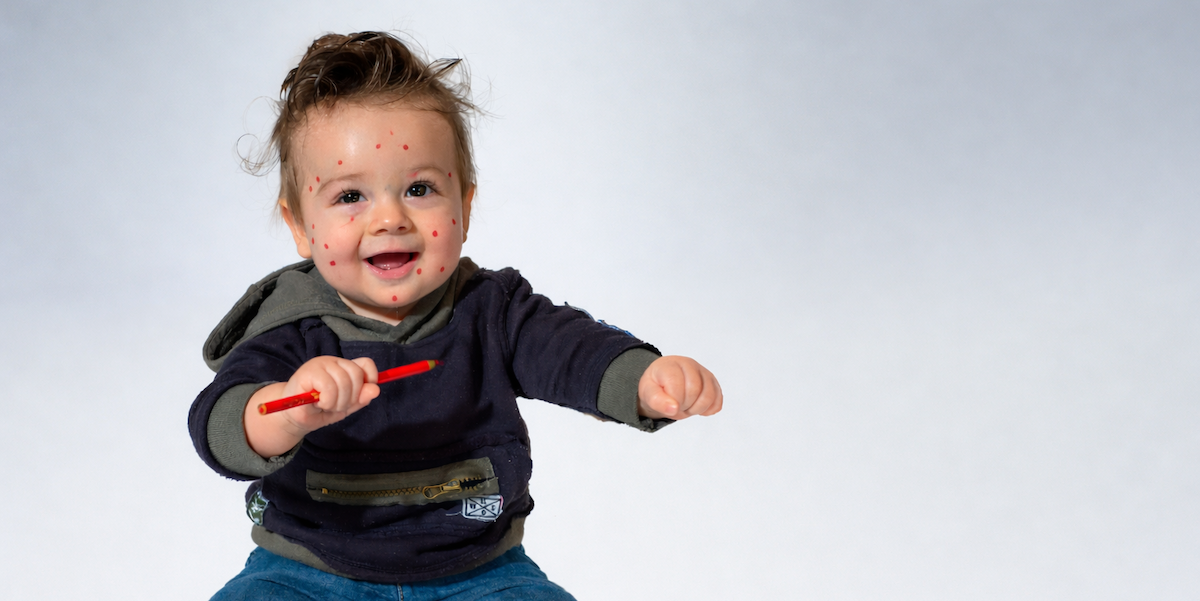
Chickenpox, also known as varicella, is a common infection caused by the varicella zoster virus (VZV). Currently, most people in the UK catch chickenpox in childhood, but this is expected to change once chickenpox vaccine becomes routine. The age at which infection occurs varies around the world. After infection, lifelong immunity usually develops, so catching chickenpox more than once is uncommon.
The main symptom of chickenpox is an itchy spotty rash. The rash can appear anywhere on the body but often starts on the face and scalp. Before or after the rash appears, some people may have a high temperature, loss of appetite or feel generally unwell. These symptoms are not always seen in young children. Spots can spread to anywhere on the body. Some people may only develop a few spots, while others have many.
Most people have a mild illness and recover within 1–2 weeks, but chickenpox can be more serious for some people including pregnant women, newborn babies and those with a weakened immune system. Adults can have more severe illness than children.
While chickenpox is usually a mild infection, it can lead to complications including pneumonia, inflammation in the brain (encephalitis) and bacterial infections.
Chickenpox spreads easily from person to person by
- touching the fluid from chickenpox blisters; or from shingles blisters if the person has never had chickenpox before (see below)
- breathing in tiny droplets of fluid from the skin blisters, suspended in the air
- coughing or sneezing, which can sometimes spread the virus through the air
- very occasionally, by touching objects that have fluid from the blisters on them
A person with chickenpox is infectious up to 24 hours before the spots appear, and until all the spots have dried up and formed a scab; this usually takes around 5 days. It takes between 10 and 21 days after contact with someone with VZV infection to develop chickenpox.
The same virus (VZV) also causes shingles. After chickenpox infection, the virus stays dormant in the body. It can then reactivate, usually later in life or if the immune system is suppressed, causing shingles. Someone who has never had chickenpox, or the varicella vaccine, can catch the virus from a person with shingles, but they will get chickenpox, not shingles. You cannot catch shingles.
Prevention
You can reduce the risk of spreading chickenpox by
- staying away from work, school or nursery until all spots have crusted over
- delaying travel until all spots have crusted over (note: you may need a medical letter to confirm that you are no longer contagious; airlines may refuse to allow travel if you still have a rash)
- avoiding close contact with
- pregnant women who have not had chickenpox or the vaccine
- newborn babies
- people with weakened immune systems
- washing hands regularly
Vaccination
Four varicella-containing vaccines are licensed for use in the United Kingdom (UK) and are listed in Table 1. These vaccines are effective in preventing chickenpox infection in individuals who have not previously been exposed to VZV.
Table 1: Varicella-containing vaccines licensed in the UK
| Vaccine | Brand | Recommendation |
| Combined measles, mumps, rubella and varicella (MMRV) | Priorix-Tetra® ProQuad® |
Routine childhood schedule |
| Monovalent varicella | Varilrix® Varivax® |
Those at*:
|
*MMRV can be considered if the individual does not have a complete MMR-containing vaccination history
As with all vaccines, it is important to assess whether a varicella-containing vaccine is appropriate for the individual, (see the Varicella chapter in the Green Book for further guidance).
Routine childhood schedule
The varicella vaccine was introduced into the UK routine childhood immunisation schedule in January 2026. The aim is to give two doses of the combined MMRV vaccine, at 12 and 18 months of age.
As MMRV is new to the UK immunisation schedule, there is a phased introduction. There is also a selective catch-up campaign which will begin in November 2026. Further details can be found in the Green Book Varicella chapter.
Other groups
For certain groups who are susceptible to chickenpox, two doses of a varicella-containing vaccine, given at least four weeks apart, is recommended. These include
- healthcare workers
- certain laboratory staff
- contacts of immunocompromised patients (people with weakened immune systems)
- the vaccine may also be considered for individuals prior to starting immunosuppressive treatment
Varicella (chickenpox) and travel
A travel health appointment is an ideal opportunity to check travellers are up to date with the routine immunisation schedule in the UK. Although chickenpox occurs worldwide, varicella vaccine is not usually recommended just because someone is travelling.
Babies aged 6 months to under 1 year, who are travelling to countries where there is a high risk of measles, and who are likely to be mixing with local people, should be given an early dose of the MMR vaccine. Babies aged 9 months to under 1 year may be offered MMRV vaccine instead, if that is the only vaccine available. Because babies do not respond fully to MMR or MMRV vaccines at this age, they still need two routine doses of MMRV at the recommended ages.
If a child has already had one routine dose of MMRV and is travelling to a country where there is a high risk of measles, the second dose can be given earlier, at least one month after the first dose. If this second dose is given before 18 months of age, and less than three months after the first dose, the child will still need a third routine dose at 18 months, as long as there has been at least a one-month gap. This is to make sure they have long-term protection.
Ideally, there should be a gap of at least four weeks between giving the yellow fever vaccine and MMRV (or MMR), as giving them too close together can lead to a reduced response to the yellow fever, mumps and rubella components of the vaccines. If protection is needed quickly, then these vaccines can be given at any interval; UKHSA guidance states an additional MMRV dose should be considered and revaccination with yellow fever can also be considered for those at ongoing risk.
Resouces
Explore more
Methanol poisoning
Methanol is a clear, colourless liquid; drinking methanol, even in very small amounts, is extremely dangerous
Mpox
Mpox is an infectious disease caused by the virus MPXV
COVID-19
The typical symptoms of COVID-19 are fever and a cough that may progress to pneumonia causing shortness of breath and breathing difficulties
Avian influenza (bird flu)
An infection in birds caused by several strains of influenza A virus and some of these strains have spread from wild birds to domestic poultry
Rabies
Rabies is transmitted to humans usually by a bite or scratch from an infected animal (usually a dog) and almost always fatal once symptoms appear
Featured Topics
Haemolytic uraemic syndrome
Haemolytic uraemic syndrome (HUS) is a rare but serious, potentially life-threatening condition, which can cause anaemia, kidney failure and can affect the brain, guts, heart, liver and pancreas
Hantavirus
Hantaviruses are a group of viruses carried by rodents, such as mice, rats or voles, that can infect humans through contact with their urine, faeces, or saliva
Malaria
Malaria is a serious and sometimes fatal disease, transmitted by the bite of an infected mosquito occurring in many tropical regions of the world
Measles
Measles is a highly infectious viral illness with the potential for serious and life-threatening complications
Methanol poisoning
Methanol is a clear, colourless liquid; drinking methanol, even in very small amounts, is extremely dangerous
Outdoor air quality
In many parts of the world, poor air quality is a significant public health problem